Monday, July 1, 2013

REPOSTING: An article about how philosophy offers real-world job skills: clear writing, thinking and communication!


Be employable, study philosophy

The discipline teaches you how to think clearly, a gift that can be applied to just about any line of work


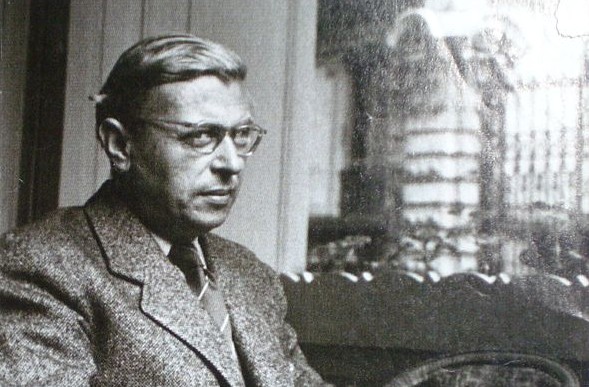
Be employable, study philosophyJean-Paul Sartre
This piece originally appeared on The Tyee.
The TyeeIt must be summer. In anticipation of fall course schedules, several people have asked what I think someone who wants to be a journalist should study.
A few years ago I realized my favourite answer — not journalism — was depressing for someone who had already reserved a seat for himself or his child at one of Canada’s more than 50 journalism programs.
That’s right: 50. According to J-Source, the journalism website, there are 1,600 J-students at any given time preparing to work in an industry that has lost anywhere from one-third to half of its jobs in the last decade. The U.S. is always slightly ahead of us in trends, and in June the Chicago Sun-Times fired its entire photography staff, replacing it with iPhones for the remaining reporters. Since most reporters shoot about as well as most photogs spell, I’m breathlessly awaiting the next report of their declining circulation.
But apparently those sorts of comments were “killing the dreams” of future journalism students, so I’ve stopped saying things like that. I figure if they don’t read enough news to know that media outlets are dropping faster than Stephen Harper’s approval rating, who am I to point out that it’s unwise to go to trade school to learn a dead trade.
Instead, I tell people the most useful classes I took were all in philosophy.
Yes, the course of study that has long been denigrated as frivolous and useless in the job market has been the part of my education that I lean on again and again. For work and everything else.
Officially, my undergraduate degree was in political science and English, and they were both handy enough — the political history of the Middle East is always relevant, although advanced Kremlin-watching turned out to be a dud. And with the 200th anniversary of Pride and Prejudice this year, I’ve put that decade I spent as a member of the Jane Austen Society to good use.
But a smattering of undergrad philosophy classes taught me something applicable to any and every job: clarity of thought. Name me one aspect of your life that doesn’t benefit from being able to think something through clearly.
A logical education


Because it delivers real skills, philosophy doesn’t go out of fashion the way the vague, trendy subjects do. The University of Windsor just announced it’s closing its Centre for Studies in Social Justice, after 11 years. I suspect some of the problem there may be that no one can actually define “social justice.” And the importance of defining terms to ensure we all mean the same thing when we’re talking is one of those skills I picked up in philosophy.
I spent a semester defining ordinary things. Hats. Chairs. It’s harder than it looks. And I remember a classmate’s resistance to it. He kept ranting that it was stupid — everyone knows what a chair is! — before dropping out.
Of course, everyone only thinks she knows what a chair is. Or social justice, for that matter. Politicians, CEOs of questionable ethics, and all PR people count on exactly that. They will say something vague — I find the buzzwords du jour all seem to have some reference to “social” in them — and leave us to fill in the blanks with whatever pleases us.
Voila: we hear whatever we want and they get away with whatever they want.
Epistemology — the study of what we can know — turned out to be particularly useful, since people love to tell reporters what they believe as if it’s a fact. Well, to be fair, they often don’t know the difference between their beliefs and facts. They think the mere fact that they believe something is true — for example, that angels watch over us — makes it true. While it’s true that they’re not lying, exactly, sorting out meaningful information from the mis- and dis- versions used to be the job of ink-stained wretches. Nowadays most of us produce advertiser-driven content, of course, but still I find the discipline inherent in epistemology useful when dealing with car sellers, alternative health practitioners, and marketers of all sorts.
The philosophy of science was also surprisingly useful. That’s where I learned about journalism’s misunderstood concept of “objectivity.” Journalists borrowed the notion from science in the 19th century, but by the late 20th century many people confused it with being fair or denying personal bias. As newspapers began introducing advertorial copy and advertiser-driven sections, they retrained their staff to talk about “balance” instead of objectivity. As if printing opposing opinions somehow makes up for running half-truths.
What objectivity really means is to test for accuracy — regardless of what you suspect (or hope) might be true. In science they test knowledge by trying to poke holes in each other’s research. News reporters were taught a variation summed up by the cliché, “If someone tells you it’s raining, look out the window.”
Cut the PoMo clot
Logic had obvious benefits, as did ethics. And I’ve found that genuine disciplines that train us to think more clearly in any field never lose their value. So I was surprised to read “The Decline and Fall of the English Major” in the New York Times.
It seems that the postmodernist theory that began infecting the academy some 40 years ago has sent sensible students running, screaming. English was hit particularly hard by this nonsense. Where they once emphasized writing, they now turn students into PoMo phrase generators who are of no use to anyone.
“They can assemble strings of jargon and generate clots of ventriloquistic syntax. They can meta-metastasize any thematic or ideological notion they happen upon. And they get good grades for doing just that,” Verlyn Klinkenborg says of the students he teaches to write at Ivy League schools. “But as for writing clearly, simply, with attention and openness to their own thoughts and emotions and the world around them — no.
“That kind of writing — clear, direct, humane — and the reading on which it is based are the very root of the humanities, a set of disciplines that is ultimately an attempt to examine and comprehend the cultural, social and historical activity of our species through the medium of language.”
In short, even the supposedly good schools are turning out students who spout meaningless blather like: “The fiction of process is strictly congruent with the discourse of pedagogical institutions.”
That little gem is courtesy of the University of Chicago’s Writing Program, which has a computerized postmodernist phrase generator. (Is that sort of satire approved by the administration?) Try it out.
With universities peddling a kind of anti-knowledge, I understand why parents want to find their kids courses that seem to promise real learning that might lead to real jobs. “Journalism” has the virtue of being a word they think they understand. Those 50 Canadian journalism schools might be training grads for a non-existent trade, they reason, but at least they will teach some of them to write reasonably clear sentences. Or so we hope.
I just saw a course outline for “website storytelling” at a local J-skool that opened with this: “Never quite got around to building your impactful on-line presence, or is your website looking old-school and tired?”
The copy editors among you can now play your favourite party game: list the errors.
Clear thinkers wanted
I’ve long thought that the debate about whether universities should be offering trades training or educating citizens is something of a red herring — the discussion should be about whether to study knowledge or nonsense. Post-secondary schools are as subject to fashions and fads as any business trying to edge out competitors; they have to fight for public funding and private donors as well as students. All too often that has them promoting programs that are little more than trendy course titles with flimsy credentials. Or selling seats in cash cow courses like journalism.
The phrase caveat emptor is never more useful to remember than when paying tuition fees. Which reminds me: At what point does the minister of advanced education ask if it’s prudent to spend taxpayers’ money subsidizing trade school programs training people for dead trades? Just wondering.
Which is why I also recall a philosophy teaching assistant, who took a sabbatical from his fat-salaried job in the computer industry to do a company-funded PhD. He had benefited from that wave of computer development that hired logical thinkers to be trained in the new-fangled gizmos. For a brief, shining moment, BAs in philosophy had been hot commodities at places like IBM. One of his pals even wrote patents for companies that developed innovative tools and techniques. It turns out you need to define that new chair-like thing that isn’t quite a chair before you can patent it.
He thought some philosophy courses ought to be mandatory for every undergrad, partly because of the economic and technological upheaval of the time. The prognosticators warned that we would change careers an average of six times and work in jobs heretofore unimagined in this brave new world.
“Jobs change. But if you teach students to think clearly first, they can do whatever else they want to do,” was the argument he made.
At the time I considered him biased. In retrospect, he was right.
Which is what I tell those who ask. Not that anyone listens — they’re all busy studying how to brand themselves.

REPOSTING: On Revising

Revising your writing again? Blame the Modernists

How self-editing became the first commandment of literature


PABLO AMARGO FOR THE BOSTON GLOBE

IT’S TOUGH to get a room full of writers to agree on anything—the best wine, the best Shakespeare play, the best time of day to work. Perhaps the only belief that today’s writers share is that to produce good writing, you have to revise.
This principle appears everywhere—in classrooms, in newsrooms, in writing guides, and especially in author interviews. “I’ve done as many as 20 or 30 drafts of a story,” Raymond Carver once told The Paris Review. “Never less than 10 or 12 drafts.” Joyce Carol Oates, who is so prolific she leaves other authors shaking their heads, has said: “I revise all the time, every day.” Even comedian Jim Gaffigan, author of the new book “Dad is Fat,” recently urged NPR’s listeners to “keep going back and rewriting things to make it clear.”
It’s easy to assume that history’s greatest authors have been history’s greatest revisers. But that wasn’t always how it worked. Until about a century ago, according to various biographers and critics, literature proceeded through handwritten manuscripts that underwent mostly small-scale revisions.
Then something changed. In a new book, “The Work of Revision,” Hannah Sullivan, an English professor at Oxford University, argues that revision as we now understand it—where authors, before they publish anything, will spend weeks tearing it down and putting it back together again—is a creation of the 20th century. It was only under Modernist luminaries like Ezra Pound, T.S. Eliot, and Virginia Woolf that the practice came to seem truly essential to creating good literature. Those authors, Sullivan writes, were the first who “revised overtly, passionately, and at many points in the lifespan of their texts.”
What caused these writers to put their faith in revision as the key to good literature? In part, it was the philosophy of Modernism—the idea that a novel or poem should challenge the reader, break with tradition, and, in the words of Pound, “Make it new.” But Sullivan, who belongs to a new wave of scholars trying to understand literature through the physical and historical realities of its creation, finds that our value of revision was also driven by something else: the typewriter.
‘Much as I loathe the typewriter, I must admit that it is a help in self-criticism.’
Quote Icon
It might seem strange to think that we owe the high style of Modernism—and the notion that even a book titled “Dad is Fat” requires strenuous reworking—to a machine. But “The Work of Revision” makes a case that what we write often comes down to how we write. Careful revision isn’t automatic or even automatically useful. And that means, as our technology changes once again, that literary style may already be undergoing another transformation.

***
WHAT FIRST GOT Sullivan thinking about revision was encountering a version of Ernest Hemingway she’d never seen before. While a first-year PhD student at Harvard, Sullivan visited the John F. Kennedy Presidential Library and its Hemingway collection. She marveled at the famous author’s archive—his letters, his family scrapbooks, even his bullfighting materials. But one thing in particular stood out to her: the typescript of his novel “The Sun Also Rises.” It showed Hemingway changing his book dramatically from one version to the next. Monologues vanished, entire plot points disappeared, and, in the end, he arrived at the terse, mysterious novel that became part of the American literary canon. “The Hemingway style that’s so familiar to us wasn’t in the first draft,” Sullivan says. “It was a product of revision.”
Hemingway’s method reminded Sullivan of the way T.S. Eliot had trimmed down “The Waste Land” from pages and pages of manuscript to the final, elliptical 434-line poem. She realized that these authors shared a profound commitment to the power of revision, and that this commitment was itself worth studying. While plenty of literary scholars had examined the way individual authors edited their own works, they rarely compared their findings between authors, or from one period to the next. By making these comparisons, Sullivan identified the Modernists as the first to practice our contemporary form of revision. She also learned how revision contributed to their distinct literary technique. “We often assume that style comes out of nowhere,” she says. “But style is produced in revision, and revision is not something writers do naturally.”
Revision didn’t start with the Modernists, of course, but the paper trail suggests that authors from the deeper past worked much differently than we are taught to do today. In 1637, for example, John Milton, perhaps the most polished poet in the history of the English language, took out a few sheets of paper and wrote the first draft of his famous elegy “Lycidas.” Thanks to a rare manuscript that survives at Cambridge, Milton experts know the author went back to revise, crossing out lines and phrases and scribbling replacements in the margin or at the bottom of the page. A flower “that sorrow’s livery wears” became a flower “that sad embroidery wears.” But for the most part even Milton stuck to such local tweaks instead of significantly recasting his work.
This same method applies to many of our greatest writers. Ben Jonson, a Renaissance playwright, once observed of Shakespeare that “whatsoever he penned, he never blotted out a line.” Jonson was gently mocking the cult of Shakespeare, and it’s certainly possible that an old chest somewhere contains several radically revised versions of Shakespeare’s plays. But that seems unlikely. In the age of Shakespeare and Milton, paper was an expensive luxury; blotting out a few lines was one thing, but producing draft after draft would have been quite another. Writers didn’t get to revise during the publishing process, either. Printing was slow and messy, and in the rare case a writer got to see a proof of his work—that is, a printed sample of the text, laid out like a book—he had to travel in person to a publishing center like London.
All of these factors suggest that revision was not something that happened on the page. Indeed, during the 19th century, the Romantics made resisting revision a virtue. The best literature, they believed, flowed from spontaneous and organic creative acts. “I am like the tyger (in poesy),” Lord Byron wrote in a letter. “If I miss my first spring—I go growling back to my Jungle. There is no second. I can’t correct.”
But something would soon change, with writers like Hemingway and Eliot insisting on not just a second chance, but a third, fourth, and fifth. Sullivan argues that this change was driven in part by a new philosophy of what made good writing. The Modernists wanted to produce avant-garde literature—literature that was less spontaneous and enthusiastic than it was startling and enigmatic. In an interview with the Paris Review, Hemingway famously described his “principle of the iceberg”: “There is seven-eighths of it under the water for every part that shows. Anything you know you can eliminate and it only strengthens your iceberg.”
An equally big part of this change, Sullivan suggests, was a shift in literary technology. In 1850, Britain was producing about 100,000 tons of paper per year; by 1903, that number had increased to 800,000 tons per year. Printers started setting type by machine, which was five times faster than setting it by hand and allowed page proofs to be easily shared and corrected. Before long, authors were guiding their books through a long and potentially fertile process: first a manuscript, then a typescript, perhaps a magazine serial, and finally a series of proofs for the book. “One thing it allowed for that revision by handwriting didn’t is massive structural transformation,” Sullivan says. “Some writers reduced their work massively, and some expanded it massively.”
In all this, the most important technology may have been the typewriter. Today we equate a keyboard with speed, the fastest way to get words down, but as Sullivan points out this wasn’t always the case. In fact, a typescript offered a chance to slow down. Most Modernist writers, like Hemingway with “The Sun Also Rises,” wrote by hand and then painstakingly typed up the results. That took time, but seeing their writing in such dramatically different forms—handwritten in a notebook, typed on a page, printed as a proof—encouraged them to revise it aggressively. “Much as I loathe the typewriter,” W.H. Auden wrote, “I must admit that it is a help in self-criticism. Typescript is so impersonal and hideous to look at that, if I type out a poem, I immediately see defects which I missed when I looked through it in manuscript.”
These changes combined to create a new and extreme approach to literary revision. Consider Ezra Pound and his well-known poem “In a Station of the Metro.” One day in 1912, he got off a train in Paris and, as he wrote in a later essay, “saw suddenly a beautiful face, and then another and another.” Pound went right to work, like a Romantic poet might have, crafting a poem to capture this “sudden emotion.” When Pound finished his 30-line poem, however, he found he hated it. Six months later, he tried again, producing a poem half the length and hating it, too. Finally, after another six months, he completed the final, two-line poem: “The apparition of these faces in the crowd; / Petals, on a wet, black bough.” It was spare, dense, and lyrical.
Slowly, the high style and ambition of Modernism became enshrined as a new literary ideal. James Joyce couldn’t stop expanding his novel “Ulysses”; by the end, he was calling in last-second additions to his printer by phone. As she revised the famous “Time Passes” section in “To the Lighthouse,” Virginia Woolf created multiple perspectives to provoke her readers. Each of the Modernists worked in different ways, but they were united in the belief that careful and substantial reworking would ultimately produce the best literature.
***
THAT BELIEF IS STILL with us today. There have been a few Romantic-style backlashes against revision—from the Beats, for instance, who often wrote with feverish speed and claimed, in the words of Jack Kerouac, that authors should “never afterthink to ‘improve’ or defray impressions.” But in most parts of literary culture, revision has become as important as inspiration.
In the last 30 years, however, technology has shifted again, and our ideas about writing and revising are changing along with it. Today, most of us compose directly on our computers. Instead of generating physical page after physical page, which we can then reread and reorder, we now create a living document that, increasingly, is not printed at all until it becomes a final, published product. While this makes self-editing easier, Sullivan thinks it may paradoxically make wholesale revision, the kind that leads to radically rethinking our work, more difficult.
“The ideal environment for revision is one where you can preserve several different versions of a text,” Sullivan says. With only one in-progress draft on a computer, we lose the cues that led the Modernists to step back from their work and to revise it. “It’s that moment of typing things up that led to the really surprising and inventive changes,” Sullivan says. “The authors came back to their text, but it seemed estranged.”
So why do we continue to champion revision? Sullivan suggests it’s partly due to the literary ideals and habits we’ve inherited from the Modernists. She also mentions the professionalization of creative writing, which pushed authors like Carver and Oates to teach at universities. “Writers need to look more like professors and to discuss their laborious processes,” Sullivan says. “‘We can’t teach you how to write, but we can teach you how to revise.’ And it’s a big business.”
Still, at a time when we’re losing the technological incentives that helped create our style of revision in the first place, there’s a chance our commitment to it may wane. We now revise in real time, doing something closer to Milton fiddling in his margins than to Hemingway retyping his work. Perhaps this is already encouraging more spontaneous and conversational kinds of literary writing.
As the history of revision makes clear, however, there are many ways to produce great literature, and Sullivan, for her part, does not seem too worried about what’s next. “We tend to be very hopeful about how much revision will achieve,” Sullivan says, “how it will transform a mediocre first draft into a masterpiece.” But revision, she adds, has always come with a cost. “It is potentially wasteful, too,” she says, “and I think we’ve lost sight of something that seemed obvious to earlier generations—revision can go too far, making something worse instead of better.”
Craig Fehrman is working on a book about presidents and their books. E-mail craig.fehrman@gmail.com.
Tuesday, June 18, 2013

REPOSTING: An article on what employers want


Giving Employers What They Don't Really Want

Careers Illustration - recrop
Brian Taylor for The Chronicle
Enlarge Image
Often what we think other people think is not what they think. For example, Michael Barnes and I conducted a study some years ago, published in the Journal of Personality and Social Psychology, on the extent to which partners in intimate relationships understood what each other wanted. We computed the correlation between what one partner actually wanted and what the other thought he or she wanted. On a scale of 0 to 1, the correlation was a meager 0.3. In other words, even people in intimate relationships don't know very well what each other wants.
The stakes for understanding our partner's wants in an intimate setting are pretty high. Equally high for academe are the stakes for understanding what employers want in college graduates. Students pay many thousands of dollars for a college education in order to prepare themselves for the job market. If the college or university is providing the wrong stuff, that's a poor investment for the students.
Reading the recent literature in the field of higher education, you might notice that what educators think employers want involves several trends:
1. Employers want students to have college majors that provide them with readily transferable job knowledge and skills. The more professional the major, the better.
2. They want students who have had access to top-quality means of knowledge transfer. In this view, perhaps MOOCs are hot because, in the ideal, the lectures would cost the students (and the colleges) next to nothing and be taught by the most famous scholars in the world.
3. They want students who have demonstrated, through grades and standardized-test scores, that they are high achievers. In addition, employers want evidence of knowledge acquired in college.
The problem is that none of those three assertions holds up well, at least according to two recent surveys of what employers really want, one conducted by the Association of American Colleges and Universities and the other by The Chronicle.
What do employers want? The association surveyed employers in the business and nonprofit sectors to find out what they most value in hiring college graduates.
With regard to Trend No. 1, 93 percent of the employers surveyed said that "a demonstrated capacity to think critically, communicate clearly, and solve complex problems is more important than [a candidate's] undergraduate major." They were not saying that a student's major does not matter, but that, overwhelmingly, the thinking, problem-solving, and communication skills a job candidate has acquired in college are more important than the specific field in which the applicant earned a degree. Looking at successful leaders in business and in the nonprofit sector, you find that they have majored in everything under the sun. Many ended up, by choice, pursuing careers in fields other than the one in which they majored.
On Trend No. 2, the association's survey found that "more than nine in 10" employers surveyed said it was important that job candidates "demonstrate ethical judgment and integrity; intercultural skills; and the capacity for continued new learning. More than 75 percent of employers say they want more emphasis on five key areas, including critical thinking, complex problem-solving, written and oral communication, and applied knowledge in real-world settings."
Those are not skills optimally developed through passive learning in lecture settings, including MOOCs. Rather, they are skills developed through active learning in settings that encourage dialogue, give-and-take, real-world problem-solving, and active mentorship. Put another way by the association, "Across many areas tested, employers strongly endorse educational practices that involve students in active, effortful work—practices including collaborative problem-solving, internships, senior projects, and community engagements."
As for Trend No. 3, educators seem to assume that employers want concrete evidence of achievement, in the form of grades, for example. But, the association's survey found, "employers consistently rank outcomes and practices that involve application of skills over acquisition of discrete bodies of knowledge." High grades on tests just don't cut it alone in terms of the broader knowledge and skills that employers value.
If we were to summarize the survey results, we might say that employers want the knowledge and skills that will be crucial not only to a student's first job, but also to his or her second, third, and fourth jobs. They want a student who has learned how to learn and how to adapt flexibly to rapidly changing demands. They're not all that concerned about specific majors or things like what gets academic credit and what does not.
The Chronicle also conducted a survey of employers, with similar results. It found, for example, that employers tend to place more emphasis on practical work and internships than on academic work. As The Chronicle survey also reported:
  • College graduates were most lacking in "written and oral communication skills, adaptability and managing multiple priorities, and making decisions and problem-solving."
  • "Only 19 percent of employers look for specific majors and do not consider candidates without them, while the majority—78 percent—will consider any major."
  • "Executives are least interested in considering candidates with specific majors (14 percent)."
Again, the survey did not say that major does not matter—simply that other qualifications matter more.
Why do we as educators often misperceive what employers want? Why are many of our impressions about what they want not entirely or even barely correct? At the very least, several current emphases in the higher-education literature do not seem to match well with the real demands of employers. Given that many students' main goal in going to college is to find a good job, why do we read so much about MOOCs, majors, and college-credit acquisition? Those issues may be important, but—according to the employer surveys—they are not central to generating the skills that best lead to employability.
Daniel Kahneman and the late Amos Tversky, two of the great cognitive psychologists, have proposed that many of our errors in thinking are a result of cognitive habits that work some of the time but not all of the time. Two such habits are representativeness and availability.
Representativeness is the degree to which something is similar in its essential characteristics to whatever population of things it is viewed as representing. The college major, for example, seems representative of what employers look for, because a major in a particular field seems to be what employers in that field want in a candidate. The student's major is viewed as representing the job. In some cases, it well may. But the association's survey makes clear that employers care more about ethics, critical thinking, creative thinking, and common sense. So in that case, representativeness leads us astray.
The cognitive habit of availability is thinking that what comes easily to mind must certainly be important. The more we hear about college majors, MOOCs, and college credit for knowledge acquired outside the campus, for example, the more we may think that those things are important and provide the answers to our problems, whatever the problems may be. So solutions to other problems somehow seem to become solutions to the problem of employability, even though they are not.
For those who really care about most students' No. 1 concern, employability, it would behoove them to read the results of those two surveys carefully. They tell us what employers really want—not just what we imagine they want—and, more important, what students need to succeed in life.
And they tell us that creative, critical, practical, and wisdom-based decision-making and problem-solving skills, along with a mindset of lifelong learning and a strong work ethic, are far more important than current fads in the literature.
Robert J. Sternberg is provost and senior vice president at Oklahoma State University, and a professor of psychology and education there. He also is treasurer of the Association of American Colleges and Universities. He will take office on July 1 as president of the University of Wyoming.